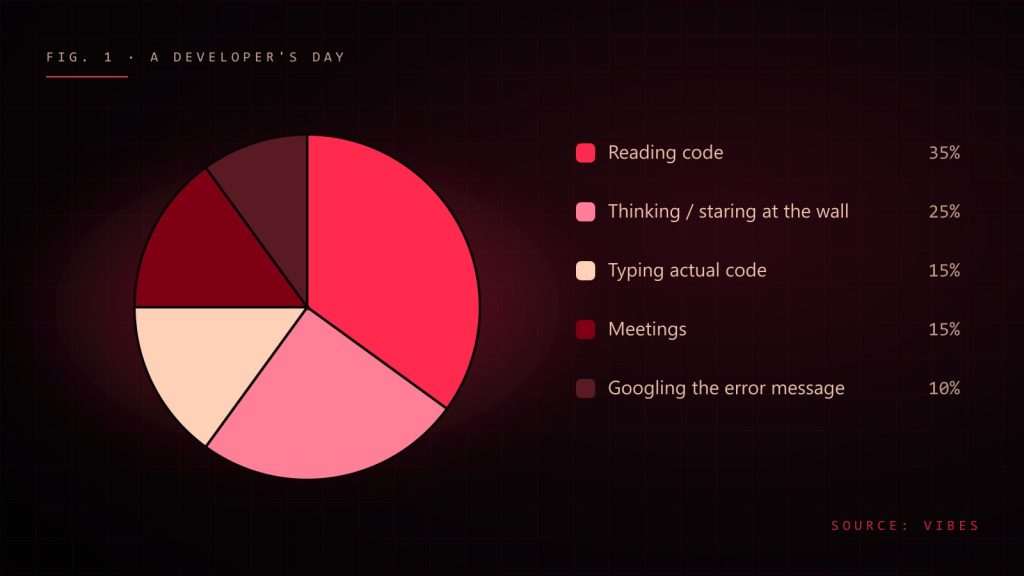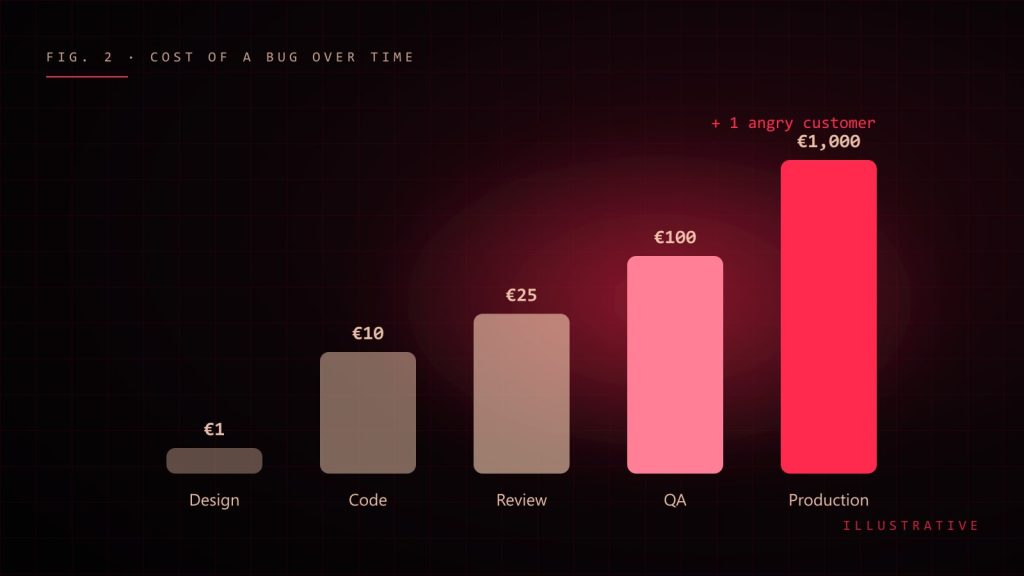
Here is a typical developer evening: you close your work laptop after eight hours of screens, walk two metres, open your personal laptop, and relax by… writing more code. Then you watch a video about code. Then you scroll through other people’s code on social media. Then you dream about a bug.
Sound familiar? You might need a hobby. A real one. One that does not end with npm install.
Why programmers need hobbies (seriously)
This is not just “have more fun”, although fun is great. A good hobby makes you a better developer:
- It gives your brain background-processing time. Some of my best solutions arrived while doing something completely unrelated. The brain keeps working on problems when you stop staring at them.
- It protects you from burnout. If your whole identity is your job, one bad sprint can ruin your whole month.
- It reminds you what learning feels like. Being a beginner at something again makes you more patient with junior teammates, and with yourself.
- It fixes your back. Your spine was not designed for twelve hours a day in a gaming chair, no matter what the RGB lights promise.
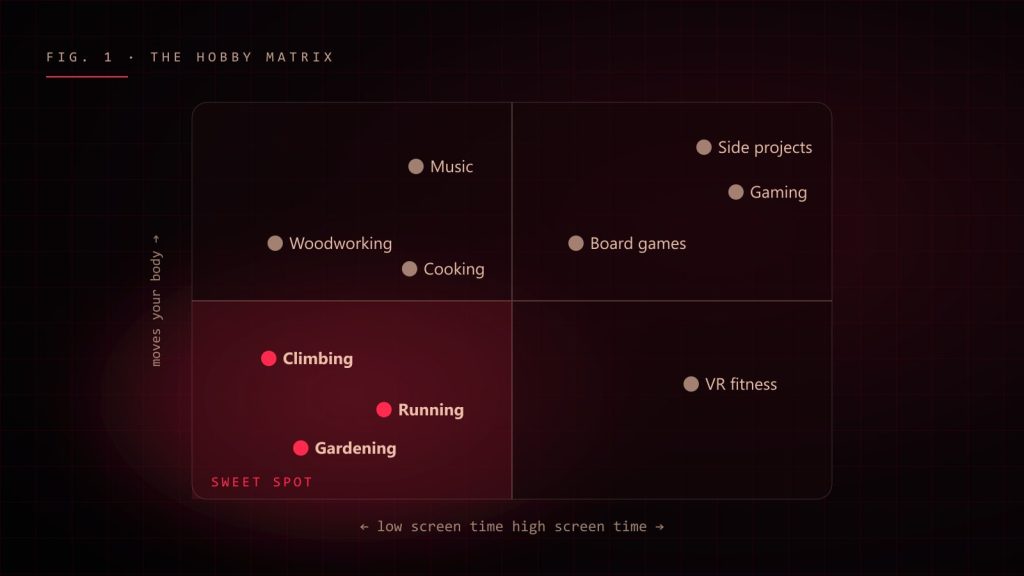
The hobby matrix
The trick is to pick something that balances what your job lacks. Programming is high-screen and low-movement, so the best counterweights are the opposite.
Some ideas that work great for developers
Things with your hands
Cooking is basically following a recipe (an algorithm), improvising when ingredients are missing (production incidents), and getting immediate feedback (it tastes good or it doesn’t). Woodworking, drawing, LEGO or model building scratch the same “build something” itch as coding, but you can hold the result in your hands, and there are no dependency updates.
Things that move your body
Climbing is popular with developers for a reason: every route is a puzzle you solve with your whole body. Running, cycling or long walks are perfect thinking time. Martial arts or dance force you to be fully present, which is a great antidote to a mind that is always half in Slack.
Things that use a different part of your brain
Learning an instrument is humbling in the best way. Learning a language (a human one!) pays off on holidays and in remote teams. Gardening teaches patience: you cannot hot-reload a tomato.
Things with other humans
Board games, team sports, volunteering, a book club. Remote work especially can make weeks go by with very little real-world social contact. A hobby with people in it is worth double.
What about coding side projects?
They are allowed! Side projects can be a wonderful hobby, as long as they are fun and not secretly a second job with no salary. Ask yourself honestly: does this project give me energy, or is it another source of guilt? If it’s guilt, it is not a hobby. It’s homework.
How to actually find your hobby
- Try things cheaply. Don’t buy a 1,500 € camera before your first photo walk. Borrow, rent, take a single beginner class.
- Give it three tries. The first session is always awkward. Judge a hobby after the third time, not the first.
- Accept being bad at it. You are not here to optimise. You are here to enjoy. Nobody is reviewing your pottery in a pull request.
- Put it in your calendar. If it’s not scheduled, work will eat it. Work always eats unscheduled time.
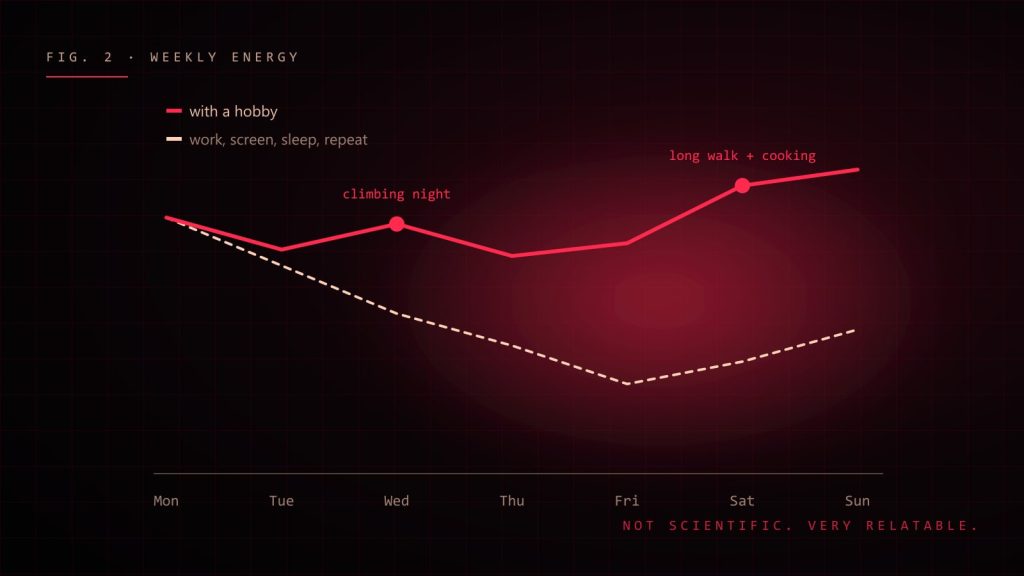
- Notice your energy. After a good hobby session you should feel lighter, not more tired.
Warning signs your hobby has become work
- You made a Jira board for it.
- You are tracking KPIs for your sourdough.
- You feel guilty when you skip it.
- You are planning to “monetise” it before you’ve enjoyed it.
If you checked more than one box, step away from the spreadsheet.
Final thought
You are more than your GitHub contribution graph. The best developers I know are also climbers, cooks, musicians, parents, gamers and terrible-but-happy gardeners. Those lives outside the screen make them calmer, more creative and much more fun to work with.
So close the laptop. Go find your thing. The bug will still be there tomorrow, and you will probably fix it faster.